
Customer Demo

Welding Revolution
Join the welding revolution with no-code teaching software for Collaborative Robot Welding.
Who We Are
At TME Systems, we help manufacturers move beyond slow, specialist-only robot programming and into practical collaborative welding.
Our no-code teaching software is built for workshops that need a simpler way to teach weld paths, adjust jobs, and make robotic welding useful on real production parts.
This site is written for Australian fabricators introducing their first collaborative welding cell, with a focus on practical no-code adoption for welders and production teams.
We support teams from demonstration through integration, training, and ongoing improvement.
For search separation, this domain stays focused on no-code collaborative robot welding: operator-led teaching, first-cell adoption, and practical workshop onboarding rather than broad robotic welding system supply.
Smooth Tool Teaser
Happy Cobot Welding Customer

Innovative Welding
Revolutionize welding with collaborative robots, practical automation, and software designed around real operators.

No-Code Teaching
Teach robots to weld without writing code, so your team can focus on weld quality and repeatability.
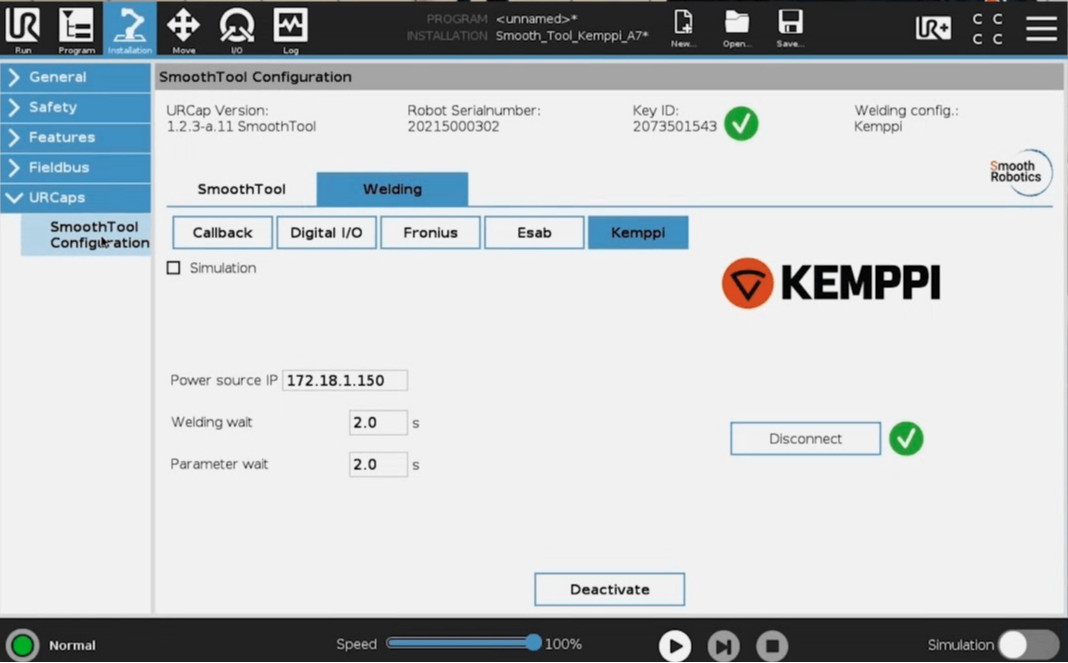
Seamless Integration
Integrate the system with existing welding power sources, fixtures, and production processes.

Intuitive Interface
A clear operator interface helps teams teach, run, and refine robotic welding work efficiently.
Let us come to you with our
Mobile Demo System
FAQ
Is coding experience required for using the software?
Not at all. The no-code teaching software is designed for welders and operators, regardless of robot programming experience.
Can the software be integrated with existing welding equipment?
Yes. TME Systems can discuss integration with a wide range of welding equipment, fixtures, and production processes.
What kind of support do you offer for new users?
We provide demonstration, onboarding, training, and support to help your team move confidently into collaborative welding.
Is collaborative robot welding safe for workers?
Collaborative robot welding is designed around controlled interaction with operators. Final safety requirements depend on the application, tooling, process, and site risk assessment.
How can I get started with Cobot Welding?
Contact TME Systems to discuss your parts, production goals, and whether a mobile demonstration is the right next step.
What parts are good candidates for robotic welding?
Good early candidates usually have repeatable fit-up, sensible torch access, stable fixturing, and enough repeat work to justify teaching and proving the weld path.
Can a cobot help with high-mix low-volume welding?
Yes, provided the right part families are chosen. No-code teaching can make changeovers more practical when jobs are similar enough to reuse fixtures, process knowledge, and weld strategies.
Does robotic welding support MIG and TIG processes?
Robotic welding can be used with processes such as MIG and TIG when the robot, power source, torch package, and process requirements are matched correctly.
Why is welding power source integration important?
The power source, wire feed, torch, communication method, and weld settings affect arc stability and repeatability. Reviewing integration early helps avoid surprises during commissioning.
Latest Cobot Welding Articles
Fresh collaborative robot welding guidance, automation notes, and workshop adoption articles from TME Systems.
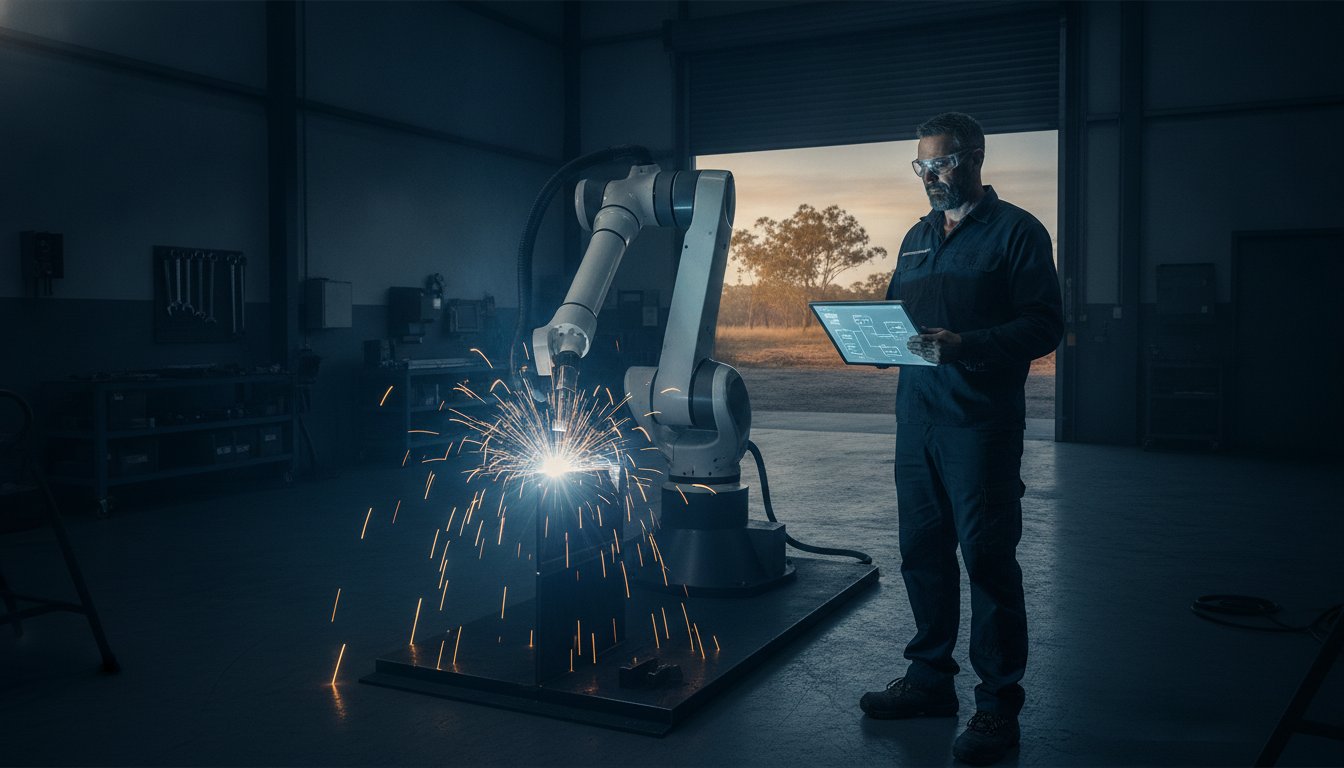
2026 Guide to Flexible Welding Automation for Job Shops
Struggling with the Aussie skills shortage? Our 2026 guide to flexible welding automation for job shops shows how no-code cobots boost small-batch output.
Read article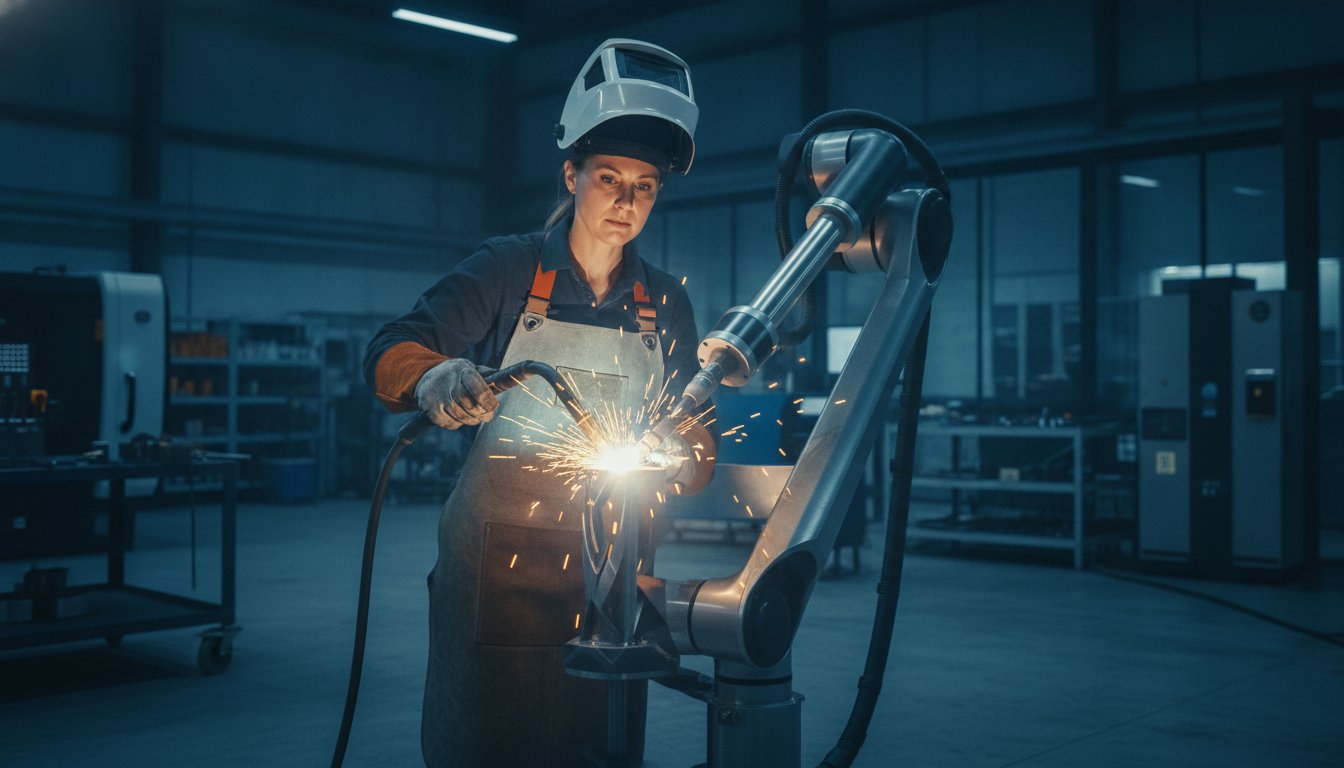
Upskilling Welders for Automation: 2026 Workshop Guide
Facing a skills gap? Our 2026 guide to upskilling welders for automation shows Aussie fabricators how to boost output with no-code cobots. Stay safe & compli...
Read article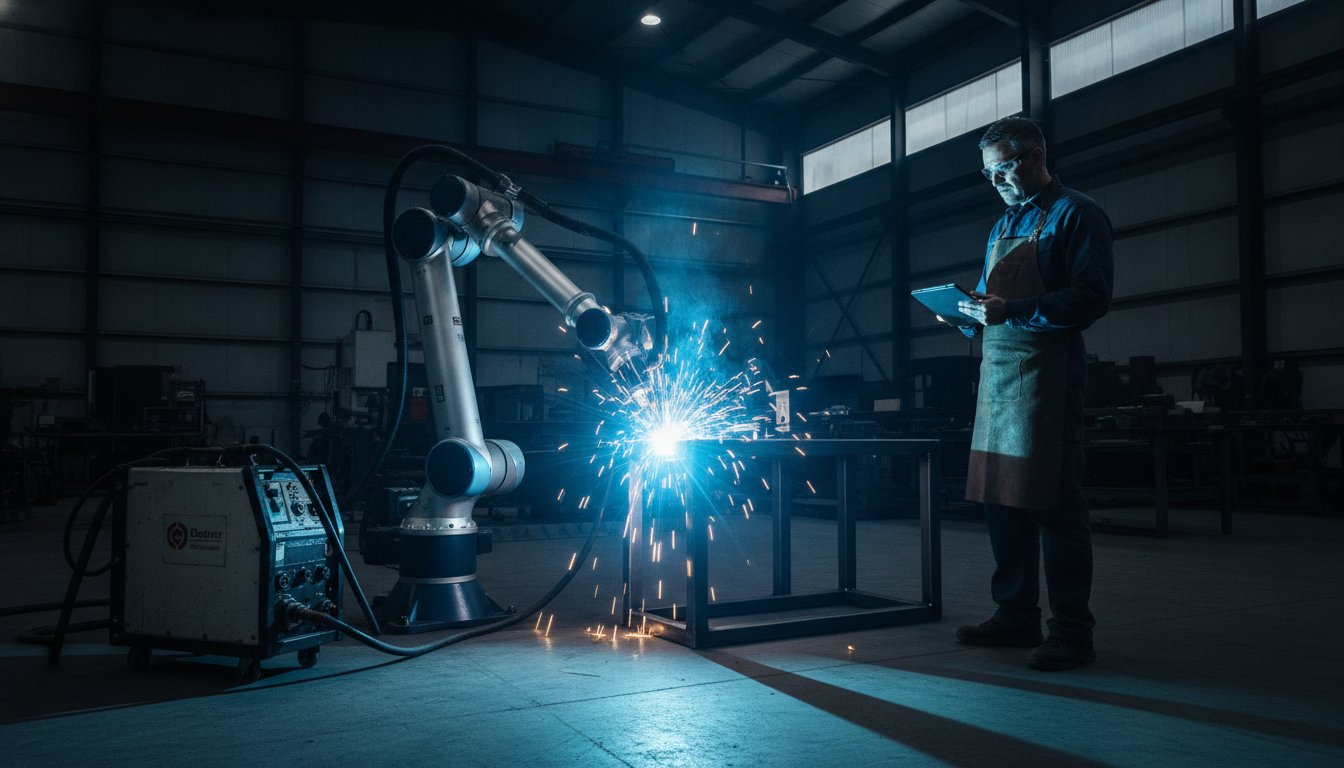
Integrating Cobot Welders with Existing Equipment: An Australian Fabricator’s Guide (2026)
A guide for Aussie fabricators on integrating cobot welders with existing equipment. Boost throughput and upskill your team without replacing your reliable g...
Read articleExplore Cobot Welding Solutions
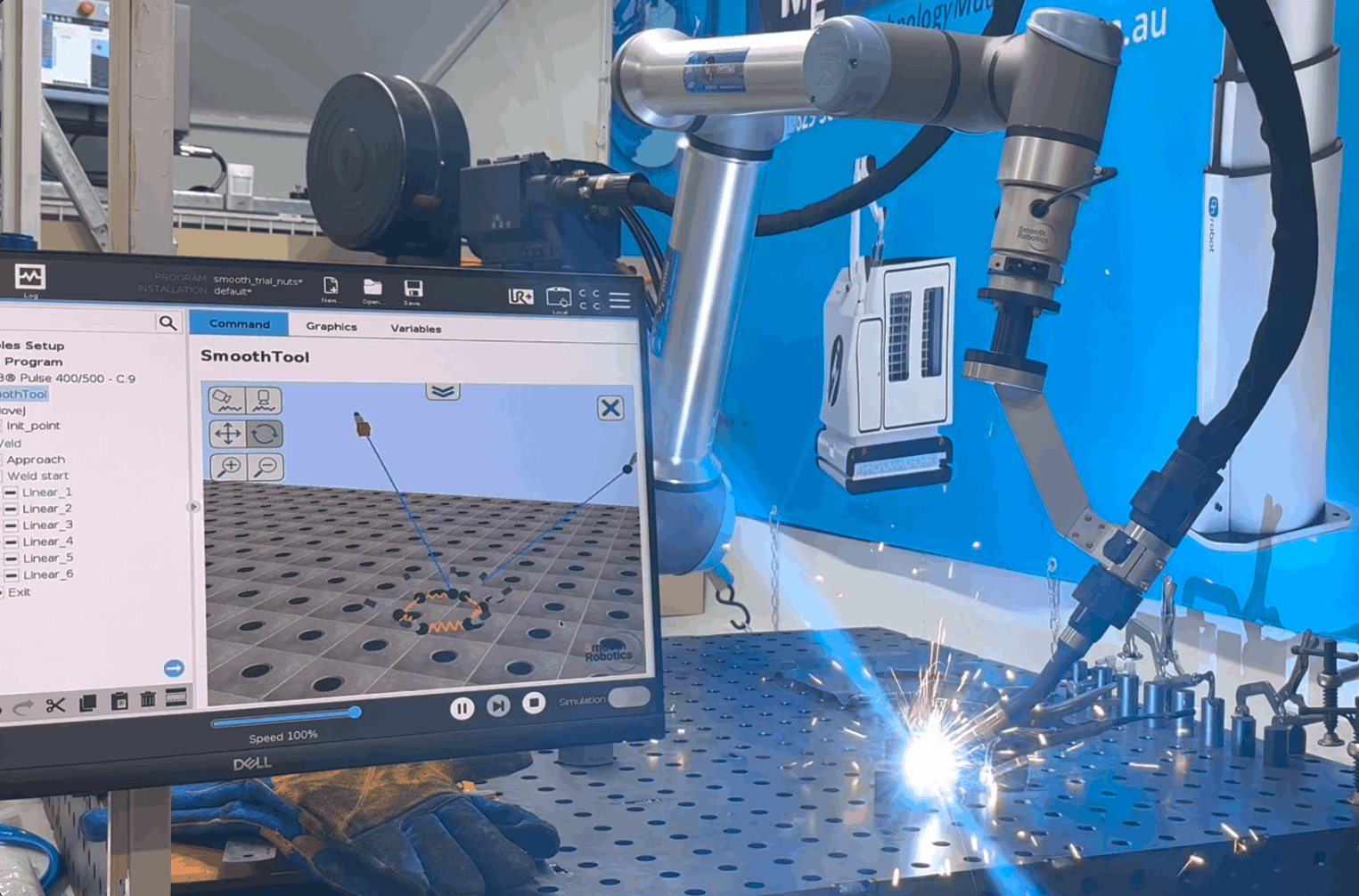
Collaborative Robot Welding
Collaborative robot welding helps fabrication teams add automation without turning every new job into a programming project.
No-Code Robot Welding Teaching
No-code teaching reduces the barrier between a skilled welder and a productive robotic weld path.

Mobile Cobot Welding Demo
The mobile demo system brings the welding cell to your site so your team can see the workflow in a familiar production setting.
Welding Automation Integration
Good welding automation needs to fit the production environment around it, not just the robot arm in the brochure.
Arc Welding Robots
Arc welding robots help manufacturers improve consistency, reduce repetitive manual welding, and keep skilled welders focused on the jobs that need their judgement.
MIG Welding Cobot
A MIG welding cobot can help fabrication teams automate repeatable welds while keeping setup, teaching, and process adjustment close to the workshop floor.
High-Mix Low-Volume Welding Automation
High-mix low-volume welding is where flexible automation needs to earn its place: fast teaching, sensible fixtures, and repeatable quality matter more than a one-size-fits-all cell.
Robotic Weld Quality and Repeatability
Robotic weld quality depends on more than movement. The path, part fit-up, welding process, power source integration, and operator workflow all need to work together.
Robotic TIG Welding
Robotic TIG welding is suited to applications where clean weld appearance, controlled heat input, and repeatable torch movement are central to the result.
Helpful Welding Automation Resources
SmoothTool software and welding features
Read more about no-code cobot welding software, programming flanges, weld features, and power source integration from Smooth Robotics.
Visit Smooth RoboticsCollaborative arc welding applications
Universal Robots explains how collaborative robots are used for arc welding, productivity, high-mix work, coordinated motion, and safer workflows.
Read the UR arc welding guideRobotic welding process fundamentals
Kemppi's robotic welding overview is useful background for MIG, TIG, automation, power source performance, and repeatable weld quality.
Read Kemppi on robotic weldingContact Us
- Phone
- +61 2 9829 3055
- Address
- 11 Louise Avenue, Ingleburn NSW 2565
- Working Hours
- Mon - Fri, 7:30am - 4:00pm