Cobot Welding advice for Australian workshops
This cobot-welding.com.au site is focused on Australian fabricators introducing their first collaborative welding cell. The content here is written around practical no-code adoption for welders and production teams, so the advice, page titles, and internal links are deliberately different from the other TME Systems welding domains.
No-code cobot welding focus
This page supports the primary cobot-welding.com.au theme: practical no-code teaching, first-cell confidence, welder-friendly operation, and collaborative welding adoption for Australian fabrication teams.
Built for high-mix work
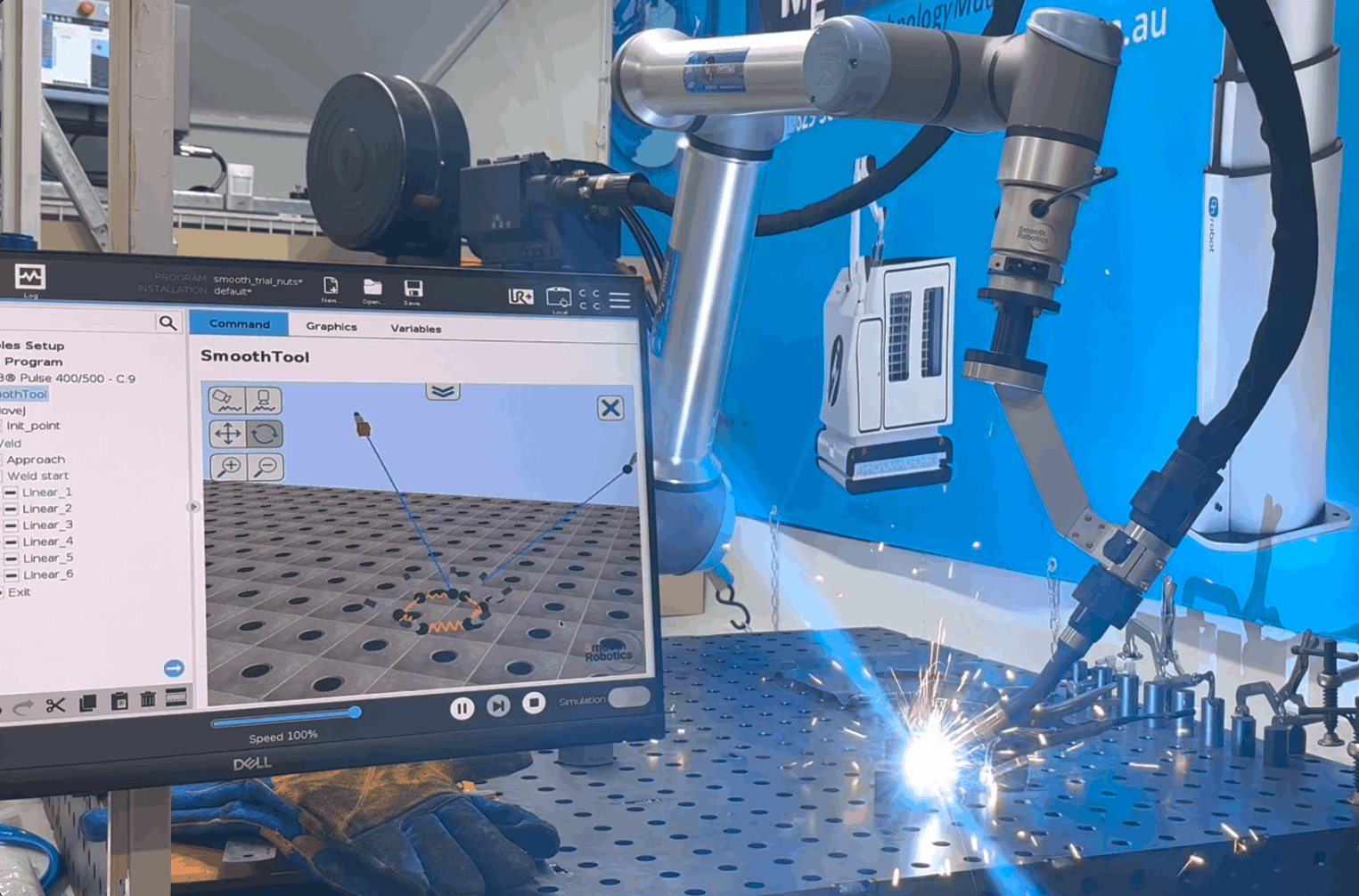
The system is suited to workshops that handle repeat parts, small batches, and changing fixtures. Operators can teach weld paths directly and refine them without needing traditional robot programming.
Practical shop-floor adoption
TME Systems focuses on making the cell usable by welders, supervisors, and production teams. The goal is a welding process that is easier to introduce, easier to demonstrate, and easier to keep productive.
Where it fits
Collaborative welding can support brackets, frames, assemblies, repair-style work, and other jobs where repeatability matters but part variety has kept automation out of reach.
Why collaborative welding is different
A collaborative welding cell is usually chosen when flexibility, operator access, and simpler redeployment matter as much as raw cycle time. It gives skilled welders a practical automation tool for repeatable work while they remain close to process decisions.
Talk to TME Systems
Tell us about your parts, welding process, production volumes, and team goals. We can help you decide whether a collaborative welding system is a practical fit.
Get Started