Cobot Welding advice for Australian workshops
This cobot-welding.com.au site is focused on Australian fabricators introducing their first collaborative welding cell. The content here is written around practical no-code adoption for welders and production teams, so the advice, page titles, and internal links are deliberately different from the other TME Systems welding domains.
No-code cobot welding focus
This page supports the primary cobot-welding.com.au theme: practical no-code teaching, first-cell confidence, welder-friendly operation, and collaborative welding adoption for Australian fabrication teams.
Clean, controlled arc welding
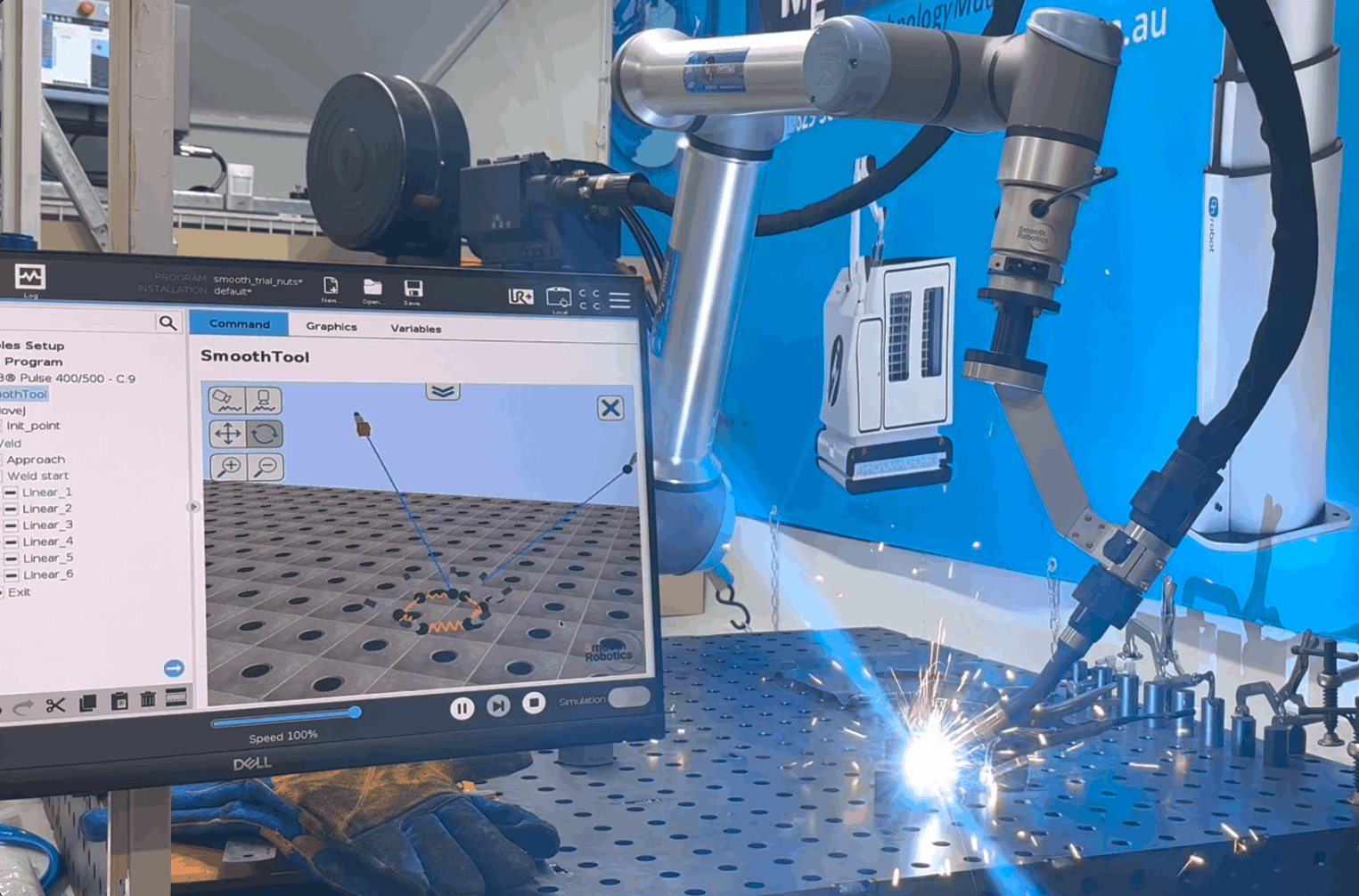
TIG welding is often chosen when weld appearance, controlled heat, and precise arc placement matter. A robotic TIG setup can help repeat the same torch angle, arc length, travel speed, and sequence once the process is proven.
Best suited to prepared parts
Robotic TIG welding rewards consistent joint fit-up, clean material, reliable fixturing, and clear torch access. Before automation, it is worth reviewing how parts are presented and whether the weld can be repeated without manual compensation.
Useful for thin and detailed work
Where a workshop needs careful heat control on thin sections, stainless steel, aluminium, or visible welds, TIG can be part of the automation discussion. The right robot, torch package, power source, and operator workflow all need to be matched to the application.
Prove the process before scaling
A mobile demonstration or application review can help confirm whether TIG, MIG, or another process is the right fit before investing in fixtures, programs, and production rollout.
Talk to TME Systems
Tell us about your parts, welding process, production volumes, and team goals. We can help you decide whether a collaborative welding system is a practical fit.
Get Started